Fat Is Leaving Your Body — So Why Do Your Pants Still Feel Tight?
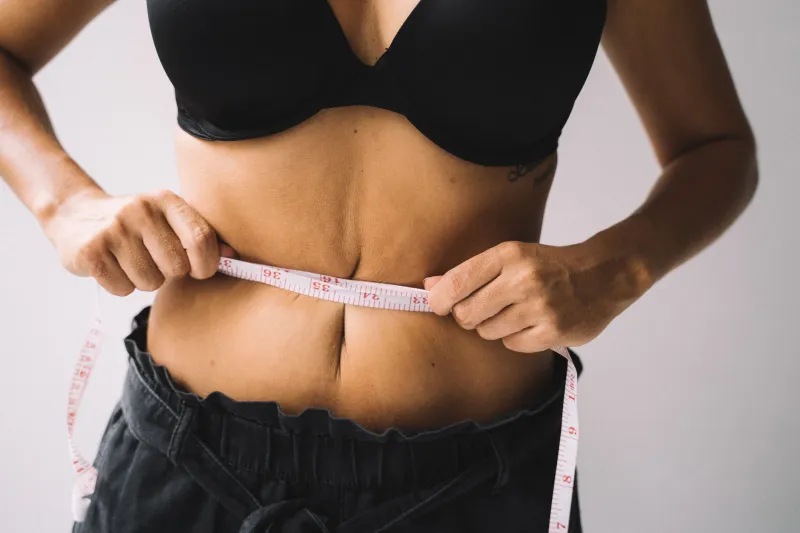
You started keto with a clear mental picture: fat melts off, clothes get loose, life gets better. And the frustrating thing is — the fat is melting off. Your body composition scans say so. Your coach says so. The math says so. But your favorite pair of jeans? Still putting up a fight.
This isn't a failure. It's actually one of the more fascinating things that happens during body recomposition on a ketogenic diet — and once you understand what's going on under the hood, the frustration starts to make a lot more sense.
Your Body Isn't a Balloon — It's More Like a 3D Puzzle
Most people imagine fat loss as a uniform deflation, like air slowly leaving a balloon. Lose fat, get smaller everywhere, done. But that's not how human physiology works — and keto, specifically, makes this even more interesting.
Fat is stored in distinct depots throughout your body: visceral fat (the stuff packed around your organs), subcutaneous fat (the stuff just under your skin), and intramuscular fat (stored within muscle tissue itself). Keto tends to hit visceral fat hard and early. That's genuinely great news for your metabolic health, blood pressure, and inflammation markers. But visceral fat doesn't show up in how your jeans fit — it's deep inside your abdomen. You can lose a meaningful amount of it and feel almost no difference in your waistband.
Subcutaneous fat — the kind that actually changes how your clothes feel — tends to come off more slowly and unevenly. Hormones, genetics, and even your stress levels determine where your body decides to hold onto it longest. For a lot of people, that stubborn subcutaneous layer around the hips, thighs, or lower belly is literally the last place their body wants to let go.
The Muscle Equation Nobody Wants to Talk About
Here's another wrinkle: keto is surprisingly good at preserving — and sometimes building — lean muscle mass, especially when your protein intake is dialed in. That's a win by almost every health metric. But muscle takes up space.
If you're losing two pounds of fat while gaining a pound of muscle, your net weight change looks underwhelming on a scale. And because muscle is denser than fat, your body's volume may not shrink the way you expected. A pound of muscle occupies significantly less space than a pound of fat, yes — but if you're adding muscle in places where your clothes are already snug (hello, quads and glutes), the fit equation gets complicated fast.
This is especially common if you've added any strength training to your keto routine, which we generally encourage. You're literally building a better body — it just doesn't always announce itself through looser waistbands right away.
Water Retention: The Wildcard That Messes With Everything
Keto's relationship with water is notoriously dramatic. In the first week or two, most people drop a significant amount of water weight as glycogen stores deplete — glycogen holds onto water at roughly a 3:1 ratio, so when it goes, so does a lot of fluid. That early whoosh feels amazing.
But water retention doesn't disappear from your life forever after that. It fluctuates. Hormonal cycles in women can cause significant water retention mid-cycle and before menstruation — we're talking two to five pounds of fluid that can make clothes feel tight even when fat is actively being lost. High sodium days, intense workouts (which cause temporary muscle inflammation and fluid retention), stress hormones like cortisol, and even certain supplements can all affect how much water your tissues are holding at any given moment.
So on the day you decide to try on those jeans as your progress test? You might be catching your body at peak water retention. The fat loss is real. The water is just temporarily in the way.
Hormones Are Quietly Deciding Your Fat Loss Geography
This one doesn't get nearly enough attention. Your hormones — estrogen, testosterone, cortisol, insulin, and others — have a massive influence over where your body stores and releases fat.
Estrogen, for example, promotes fat storage in the hips, thighs, and lower belly in women. As estrogen levels shift (whether through natural cycles, perimenopause, or other factors), the pattern of fat loss shifts too. Keto can improve insulin sensitivity dramatically, which helps overall fat metabolism — but it doesn't override every hormonal signal telling your body to protect certain fat stores.
Cortisol is another big one. Chronic stress keeps cortisol elevated, which actively promotes fat storage around the midsection — the exact place most people are watching most closely. If your life is stressful right now (and whose isn't?), that hormonal environment is working against the visible progress you're hoping to see, even while fat loss continues in other areas.
So What Can You Actually Do About This?
First, reframe what "progress" looks like. Clothes fit is one data point — a useful one, but not the whole story. Body measurements at multiple sites (waist, hips, thighs, chest, arms) give you a much fuller picture. Progress photos taken in consistent lighting and clothing can reveal changes that neither the scale nor a single pair of jeans will show you.
Second, be patient with the subcutaneous fat timeline. It will come off — it just tends to be last. Staying consistent with your keto macros, keeping protein adequate to support muscle maintenance, and managing stress (easier said than done, we know) all support the process.
Third, consider tracking your measurements around the same time each week, under similar conditions. Weighing yourself or doing a clothes test after a high-sodium dinner or during a high-stress week is going to give you noisy data. Consistency in when and how you measure matters.
Finally, trust the process more than the pants. Your body is doing something genuinely complex — losing fat, potentially building muscle, shifting fluid, rebalancing hormones. That doesn't happen in a straight line, and it doesn't always show up first in the places you're watching most closely.
The Bottom Line
Keto body recomposition is real, it's happening, and it's working — even when your wardrobe hasn't gotten the memo yet. Fat loss, muscle changes, water fluctuation, and hormonal fat distribution patterns all interact in ways that make the clothes test an unreliable judge of your actual progress.
Keep going. Measure smarter. And give your body the credit it deserves for doing something genuinely hard.